
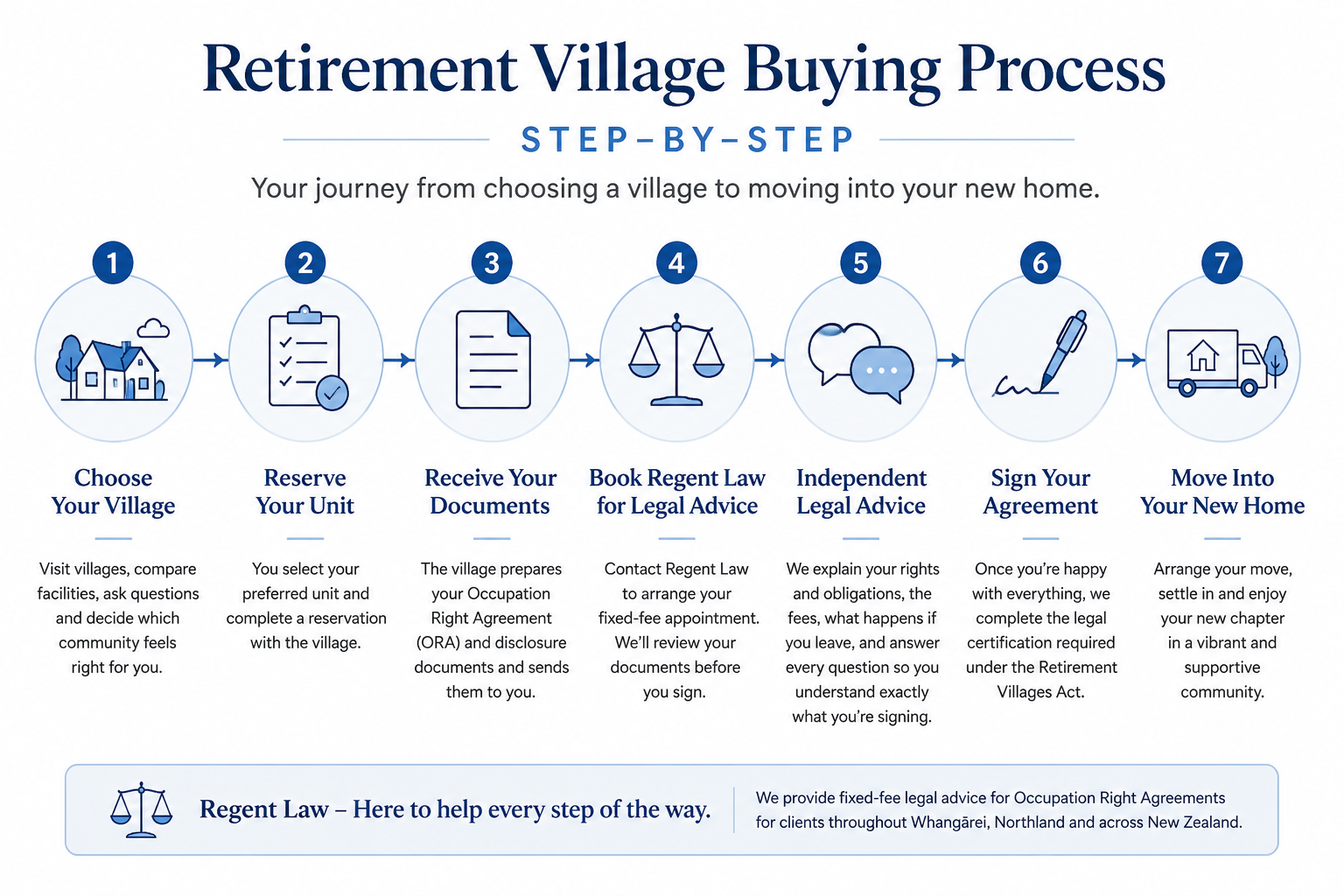
Deciding to move into a retirement village is a significant life decision. While every village has its own process, the overall journey is usually very similar.
Understanding what to expect can help you feel more confident and avoid unnecessary stress.
Here’s a practical guide to the retirement village buying process from the perspective of someone preparing to make the move.
Step 1: Decide whether a retirement village is right for you
Before looking at specific villages, spend some time thinking about what you’re hoping to achieve.
Ask yourself questions such as:
- Do I want a more manageable home?
- Would I enjoy living in a community?
- What support might I need in the future?
- How important are location, activities and healthcare services?
- Will family and friends be able to visit easily?
This is also a good time to discuss your plans with your family, although the decision is ultimately yours.
Step 2: Visit a few retirement villages
Every retirement village has its own atmosphere, facilities and pricing structure.
Visit several villages if you can.
Take your time, ask plenty of questions and don’t feel pressured to make an immediate decision.
Things to consider include:
- the location
- the style and size of the units
- village facilities
- ongoing fees
- the social environment
- future care options
- parking and visitor access
- whether pets are permitted
- any waiting lists.
Choosing the right community is just as important as understanding the legal agreement.
Step 3: Reserve your preferred unit
Once you’ve chosen a village, you’ll usually be invited to reserve a unit.
The village will then prepare a package of documents for you.
This often includes:
- the Occupation Right Agreement (ORA)
- disclosure statements
- village rules
- other information required by law.
At this stage, don’t worry if the documents seem overwhelming. It’s completely normal for them to be lengthy and technical.
Step 4: Arrange independent legal advice
Before you can sign an Occupation Right Agreement, you must receive independent legal advice.
This is where your lawyer comes in.
At Regent Law, we’ll carefully review the documents and explain:
- what your Occupation Right Agreement means
- your legal rights and responsibilities
- the financial arrangements
- any clauses you should pay particular attention to
- any questions you may wish to raise with the village.
Our goal isn’t to make the decision for you. It’s to make sure you understand the agreement well enough to make an informed decision.
Step 5: Ask questions
This is your opportunity to ask anything that isn’t clear.
No question is too small.
Some common questions include:
- How do deferred management fees work?
- When will my estate receive repayment?
- What happens if I move into hospital care?
- Can I renovate or make changes to the unit?
- What happens if I decide to leave the village?
A good lawyer will answer these questions in practical language, not legal jargon.
Step 6: Sign the Occupation Right Agreement
Once you’re comfortable with the agreement and have received independent legal advice, you’ll be ready to sign.
Your lawyer will complete the legal certification required before the village can finalise the transaction.
After signing, the law provides a cooling-off period during which you may be able to cancel the agreement if you change your mind. Your lawyer will explain how this works and the relevant timeframes.
Step 7: Prepare for moving day
Once everything has been completed, it’s time to plan your move.
Many people find this is a good opportunity to:
- downsize belongings
- organise removalists
- notify utility providers
- update their address
- discuss the move with family and friends.
Although moving can feel like a big change, many residents say they wish they had made the move sooner.
How long does the process usually take?
Every retirement village is different, but it’s sensible to allow around two to three weeks from the time the village sends your documents to your lawyer until you’re ready to sign.
If you’re also selling your home, your move into the village may be coordinated with the settlement of your property.
Starting the legal process early can help avoid unnecessary delays.
How Regent Law can help
At Regent Law, we provide fixed-fee legal advice for Occupation Right Agreements for clients throughout Whangārei, Northland and across New Zealand.
We understand that retirement village documents can seem daunting. Our role is to simplify the legal process, explain everything in straightforward language and answer your questions so you can move forward with confidence.
Whether you’re moving into your first retirement village or comparing different options, we’re here to help you understand exactly what you’re signing.
Ready to take the next step?
If you’ve received your Occupation Right Agreement, we’d be pleased to help.
Click here to arrange your fixed-fee appointment. We’ll review your documents, explain the important legal and financial terms, and make sure you feel confident before you sign.
Moving into a retirement village is a new chapter. Good legal advice helps you begin that chapter with clarity and peace of mind.





Leave A Comment